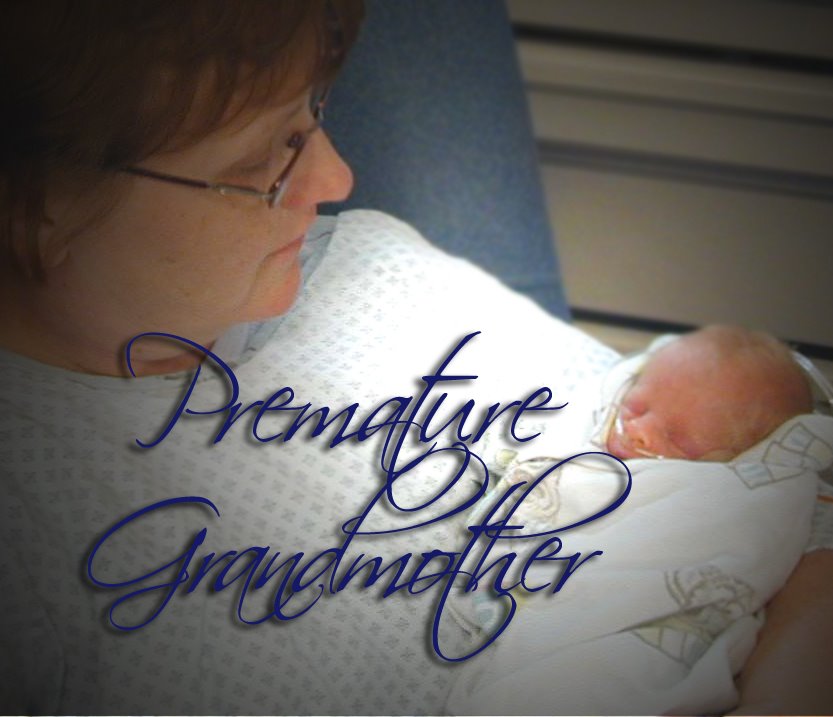
The following is an Article that I found on my message board. It was posted by Sarah, a NICU parent. I thought it was so good I asked her for permission to reprint it here for you to see. I have checked out the facts of her article and they are true. You can look up the History of Kangaroo Care on Google. I thought this was better because it is from a parent who knows! Enjoy!
-------------
For those of you who are veteran NICU visitors, you likely have an idea what I’m about to address, but maybe even the most experienced NICU "club" members can learn something from this.
What I’m addressing is not animals hopping around in the NICU, but a very intelligent practice that was developed from the care a mother kangaroo has for her little baby Joey. When a very helpless and immature baby kangaroo is born, it slowly makes its way up to it’s mom’s milk supply where the tiny Joey remains for months. These little guys thrive in their little protective pouches, completely dependent on his mother for months. For those of you that are still not exactly sure how the marsupial "kangaroo" name got in the Neonatal Intensive Care Unit, let me explain.
"Kangaroo Care" as it's most often referred to was implemented in the country Columbia in the early 1980’s by a couple of physicians. Having a premature infant in America in the 80’s was a luxury in comparison to having a child in Columbia where much of the country was stricken with poverty. Neonatal Intensive Care Units were no where near what they are today. Many, many families did not have the option of a NICU either because they could not afford extensive hospitalizations or simply because there was a lack of staff and equipment to run adequate NICU’s.
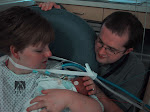
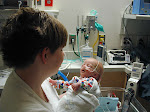
So, what’s a mother to do when she doesn’t have the financial supporto or resources to have her premature baby in a NICU? Okay, get ready for this...She strips her baby down of his clothing down to his or her diaper and then she places the baby against her bare chest. After that, she covers both herself and the baby up. Then together she will go about her business.
Sounds a bit strange doesn’t it? It may sound strange, but the mortality rate of these infants dropped nearly 40% which is miraculous considering the fact that there is very little to no invasive intervention with this method. I was IMing with one of my group members the other day and was discouraged to hear that some of the staff wasn’t being supportive of this type of care. If they are working in the NICU, they should know that that isn’t true. Many studies have been done on "kangarooing" and there have been no real negative effects of this type of bonding. In fact, most of the studies I have come across where very much in support of "kangaroo Care". The following are just some of the benefits of "Kangaroo Care":
- a deeper and much needed sleep for the baby
- lower Oxygen requirements and deeper oxygen saturation
- fewer spells of APNEA (short cessation in breathing)
- fewer Bradys (drop in heart rate) which generally means a heart rate that drops below 100 beats per minute which lasts generally longer than 15 seconds
- the infant can maintain it’s temperature easier which is often difficult for preemies
- faster weights have been noted (which means just one more thing to nudge you guys out the door and back home).
- babies generally remain calmer because they can hear their mother’s heartbeat
- easier to establish mother to child and child to mother bonding which is obviously needed
- longer periods of alertness
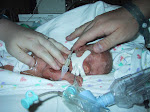
These are some of the major benefits of "Kangarooing" with your baby. If someone tells you that your baby is too little for that, I would definitely question that. I personally did "kangaroo Care with both of my children when they were in the NICU. My oldest is my daughter named Tianna and she was born at 28 weeks gestation. She had relatively no health issues that were life threatening or that I should have worried about. My son Devin was also "kangarooed" and he was born at 23 weeks gestation. I did "kangaroo care" with him despite the fact that he was only around 4 or 5 weeks old and still very, very tiny and very sick. The nurses had to literally tape his ventilator (to aid in breathing) tubes to me so he didn’t accidentally extubate himself which means have his tubes pulled out. So I believe that if the staff believed in "kangrooing" a baby that was born 16 weeks early, and still on the "vent" , chances are you can do the same with your baby. The only negative aspect of doing "kangaroo care" with my son Devin was that his stats did drop a little during the transfer from the bed to me but that only happened for a couple seconds and they went back up. I truly believe my children thrived in part because of the "kangaroo care" which tends to make a baby feel more like they are back in the womb and are comforted by listening to their parents heartbeat. "kangarooing" is not limited to mom either so I encourage fathers to "kangaroo" as well.
There are reasons that you may not be able to kangaroo with your baby. Your baby may be too sick to do this type of care with so ultimately you will likely have to leave it up to the staff, but if you feel your baby can handle it, and you want do do...it’s okay to argue your case with staff.
Friday, May 23, 2008

Wednesday, May 7, 2008
100% All Natural Organic Cotton Preemie Tees
While I have never had a need to use organic cotton exclusively. I can understand why it is important for some people. When I was a teenager my mother had a breakdown in her immune system that caused her to have to remove all chemicals from her food and her environment. It was a scary time for all of us. She was allergic to almost everything - unable to eat lots of foods, smell chemicals, perfumes, cleaning products, soaps or even read the newspaper and she was unable to wear anything except all organic fabrics. Eventually her system went back to normal but it left me with an appreciation for why natural products are needed and even preferred.
Given the delicate systems of premature babies I was elated when my primary fabric supplier told me that they had organic cotton available for me to purchase! And with any luck they will continue to carry it well into the future. Our organic cotton is grown in the United States and milled in Manitoba, Canada and then shipped back to me in the United States. No chemicals, dyes or harmful substances are used in the growing, harvesting, processing or milling of this cotton. Since all of our Preemie Tees are made-to-order you can have anything we carry made up in the organic cotton. Just pick "organic cotton" as your fabric choice when placing your order. I believe we have the largest selection of organic cotton wear available to premature babies anywhere! And we are excited to make it available to you!
The Benefits of Organic Cotton
Organic cotton baby clothes are a hot commodity with retailers recently - it is the latest trend in "trendy" becoming a new fashion statement in clothes for tots. Almost everyone, including places like Wal-mart carry a line of organic cotton baby clothes. But even with this hot new trend most parents do not have any idea what it really means to be organic.
Basically, organic is means that something is grown in a chemical-free environment. Organic means that the fields the cotton is grown in is free from pesticides or chemicals for at least three years. No fertilizers are used as well. Organic farmers fertilize their fields by rotating the crops, using composted manure and planting other crops that naturally feed nitrogen into the soil. Further, organic farms are heavily regulated and watched by a third party to ensure that organic cotton is exactly what it claims to be.
Conventional cotton has no such regulations and it is impossible to judge what extent pesticides are used. The concern comes because the cotton absorbs any chemicals as it grows and the chemicals do not wash out in processing. Further, manufactures add to this chemical mix the addition of dyes and sizing. Baby clothes made from organic cotton insure that sensitive systems are not compromised through pesticides, chemicals or dyes.
Eating foods and wearing clothes that are organically grown is good for you and good for the environment by having a low impact on the land, farmers and workers. Everyone benefits - especially the babies. Organically grown cotton has a softness and quality that cannot be matched and is the top reason people choose organic cotton for their baby's delicate skin. Conventional cotton fibers are weakened by chemicals, processing and dying that break down the fibers and produce an inferior product. This is why organic cotton is a stronger, softer, better cotton. Because of the way organic cotton is made it is a little more expensive. For now we will not charge more for the organic cotton option but it may become necessary in the future.
Our organic cotton is a natural color and we are looking into finding natural dyes that do not fade in the washer. Until we find a good dye and a cost effective way to process it we will only carry the natural color. But feel free to add color with over 26 colors in our snap selection.
We hope you will like our new product!
(For more information on organic cotton search the words "why organic cotton" on any search engine.)
Given the delicate systems of premature babies I was elated when my primary fabric supplier told me that they had organic cotton available for me to purchase! And with any luck they will continue to carry it well into the future. Our organic cotton is grown in the United States and milled in Manitoba, Canada and then shipped back to me in the United States. No chemicals, dyes or harmful substances are used in the growing, harvesting, processing or milling of this cotton. Since all of our Preemie Tees are made-to-order you can have anything we carry made up in the organic cotton. Just pick "organic cotton" as your fabric choice when placing your order. I believe we have the largest selection of organic cotton wear available to premature babies anywhere! And we are excited to make it available to you!
The Benefits of Organic Cotton
Organic cotton baby clothes are a hot commodity with retailers recently - it is the latest trend in "trendy" becoming a new fashion statement in clothes for tots. Almost everyone, including places like Wal-mart carry a line of organic cotton baby clothes. But even with this hot new trend most parents do not have any idea what it really means to be organic.
Basically, organic is means that something is grown in a chemical-free environment. Organic means that the fields the cotton is grown in is free from pesticides or chemicals for at least three years. No fertilizers are used as well. Organic farmers fertilize their fields by rotating the crops, using composted manure and planting other crops that naturally feed nitrogen into the soil. Further, organic farms are heavily regulated and watched by a third party to ensure that organic cotton is exactly what it claims to be.
Conventional cotton has no such regulations and it is impossible to judge what extent pesticides are used. The concern comes because the cotton absorbs any chemicals as it grows and the chemicals do not wash out in processing. Further, manufactures add to this chemical mix the addition of dyes and sizing. Baby clothes made from organic cotton insure that sensitive systems are not compromised through pesticides, chemicals or dyes.
Eating foods and wearing clothes that are organically grown is good for you and good for the environment by having a low impact on the land, farmers and workers. Everyone benefits - especially the babies. Organically grown cotton has a softness and quality that cannot be matched and is the top reason people choose organic cotton for their baby's delicate skin. Conventional cotton fibers are weakened by chemicals, processing and dying that break down the fibers and produce an inferior product. This is why organic cotton is a stronger, softer, better cotton. Because of the way organic cotton is made it is a little more expensive. For now we will not charge more for the organic cotton option but it may become necessary in the future.
Our organic cotton is a natural color and we are looking into finding natural dyes that do not fade in the washer. Until we find a good dye and a cost effective way to process it we will only carry the natural color. But feel free to add color with over 26 colors in our snap selection.
We hope you will like our new product!
(For more information on organic cotton search the words "why organic cotton" on any search engine.)
Subscribe to:
Posts (Atom)




 Posts
Posts